
The House Always Wins? Not If You Understand Variance First
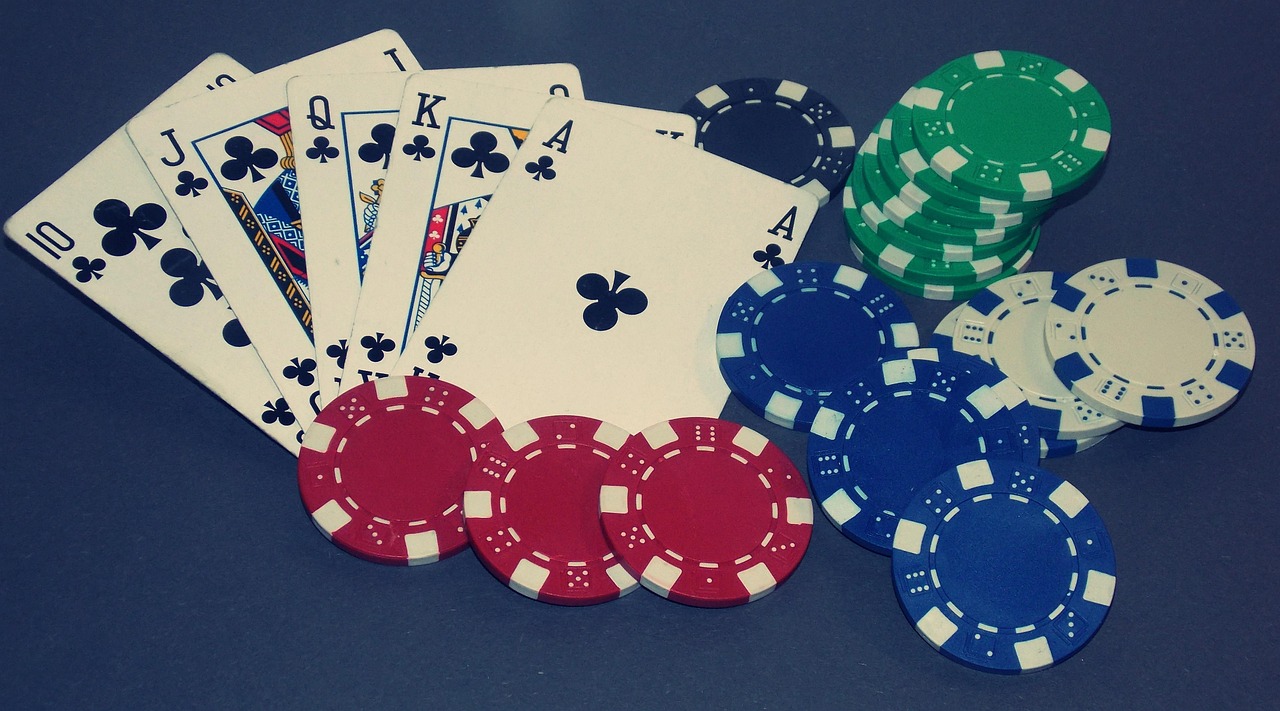
Every gambler has heard the phrase "the house always wins." It's true, mathematically — but it's also incomplete. The house wins over time, across millions of spins and hands. In any single session, you might walk away up two grand. That gap between long-term expectation and short-term reality is where every serious player actually operates, and understanding it separates people who treat gambling as entertainment from people who treat it as a slow bleed.
Let's talk about what's really happening when you sit down at a slot machine, a blackjack table, or a poker room — and how to think about it like an adult with a budget rather than a mark with a dream.
Expected Value: The Only Math That Matters Long-Term
Every casino game has a house edge. Slots typically run 2% to 10% depending on the machine and jurisdiction — some penny slots in Vegas push 12% or higher. European roulette sits at 2.7% (the single zero). American roulette doubles that to 5.26% because of the extra double-zero pocket. Blackjack with perfect basic strategy can drop to 0.5%. Video poker variants like Jacks or Better can go as low as 0.46% with optimal play. keonhacaii5.com.co covers this in more detail.
That edge determines your expected loss per hour, and it's shockingly easy to calculate. If you're playing a slot with a 4% house edge at $2 per spin and 600 spins per hour, your expected hourly loss is $48. On a $10 blackjack table with basic strategy and 60 hands per hour, it's closer to $3. The difference between a $50/hour habit and a $3/hour habit is a week-long Vegas vacation versus a mortgage payment.
None of this means you'll lose exactly that amount. It means that's the average across infinite play. Variance is real. But variance only cuts both ways for a while. Extend the session long enough and the edge grinds you down like waves on rock.
Slots: Volatility Is the Whole Game
Slot machines don't just differ by RTP. They differ by volatility, and this is the factor most players completely ignore. Two machines can both advertise 96% RTP and behave nothing alike.
- Low volatility: frequent small wins. Think 50-cent wins every 20 spins. Your bankroll lasts a long time, but you rarely see a meaningful score.
- Medium volatility: balanced. Wins arrive less often but usually return a chunk of your buy-in.
- High volatility: long dry spells punctuated by rare huge hits. Megaways slots, jackpot progressives, and many bonus-buy titles live here.
If you sit at a high-volatility slot with a $50 bankroll and expect to play for two hours, you're not unlucky when you bust out in 15 minutes — you misread the machine. High-volatility slots demand hundreds of spins of bankroll to have a fair shot at the bonus round. Players who understand this either bring more money or choose lower-volatility games for long sessions.
One concrete tip: check the paytable and the RTP disclosure before you commit. Many regulated markets (UK, Malta, several US states) require the RTP to be publicly listed. If you can't find it, assume it's on the low end.
Poker Is a Different Animal Entirely
Poker isn't played against the house in the same way slots are. You're playing against other people, and the house takes a rake. That single fact changes everything. There's no fixed house edge because your edge depends entirely on who's sitting at your table.
A skilled player at a soft $1/$2 no-limit table can realistically earn 5-10 big blinds per hour, which is $10-$20/hour. The same player at a tough $5/$10 game online might be a losing player after rake. The game didn't change. The opponents did.
Three things genuinely move the needle for poker players:
- Game selection — scouting soft tables matters more than any advanced play. A mediocre player at a great table beats a great player at a bad one.
- Bankroll management — 20 buy-ins minimum for cash games, 50-100 for tournaments. Under-rolled players make desperate decisions and torch their edge.
- Rake awareness — at low stakes, rake can eat 5-10 big blinds per hour. You need to beat the rake before you beat the players.
Poker rewards study in a way slots never will. Solvers, tracking software, and hand review can genuinely turn a losing player into a winning one over six to twelve months of serious work. There's no equivalent for slots or roulette. That's not a moral judgment — it's just what the games are.
Bankroll: The Discipline Nobody Wants to Hear About
Here's the uncomfortable truth: most people who gamble recreationally never set a bankroll. They set a feeling — they'll stop when it stops being fun, or when they hit a number, or when their gut says so. That's not a strategy. That's a recipe for the classic tilt spiral where a $200 loss becomes a $1,200 loss over 40 minutes.
A real bankroll looks like this:
- Money you can afford to lose entirely without affecting rent, savings, or your mood for a week.
- Split into session chunks. If your monthly gambling budget is $400, don't bring all $400 to one session.
- Paired with a stop-loss (leave at minus 50% of session bankroll) and a stop-win. Yes, a stop-win. Locking in a good night is a skill.
Players who survive decades in this space aren't the ones chasing jackpots. They're the ones who treat it like a hobby with a defined cost, the same way a golfer budgets for green fees and a new driver every few years.
Where the Real Entertainment Value Lives
If your goal is maximum entertainment per dollar, here's how the games stack up:
- Slots: highest cost per hour, but the most visceral. Great for short, immersive sessions. Terrible for long grinds on a small bankroll.
- Table games: blackjack and baccarat offer the best odds for the casual player. Slow pace, social atmosphere, low hourly cost.
- Poker: the only game where a skilled player can have a positive expected value. Also the only one that requires actual study.
- Sports betting: sharp lines make it hard, but line shopping and bonus exploitation can give a knowledgeable bettor a real edge in specific spots.
The common thread is that knowing the rules deeply — not just how to play, but how the edges work — turns gambling from a coin flip into a managed expense or, in rare cases, a genuine skill pursuit.
The house always wins on average. You're not the average. You're one person, in one session, with one bankroll. Play like that's true and you'll enjoy this hobby a lot longer than the guy next to you feeding a high-volatility slot with his rent money. The math doesn't care about your feelings — but it does reward the people who bother to learn it.

4 Comments