
How to Choose the Right Yarn for Beginners
Why Your First Yarn Matters More Than Your First Pattern
It is tempting to choose your first yarn on colour alone. You spot a beautiful deep navy in the wool shop, or a fluffy pastel that looks like a cloud, and you imagine the scarf it will become. Then you get home, cast on, and discover you cannot see your stitches, your yarn keeps splitting, and the whole thing feels like a fight. That experience has put more beginners off knitting and crochet than any complicated pattern ever has.
Yarn is not a neutral choice. It decides whether you can read your own fabric, whether your tension stays even, and whether you actually finish the project. Get this one thing right and everything else becomes far easier.
Start With Smooth, Light-Coloured Wool
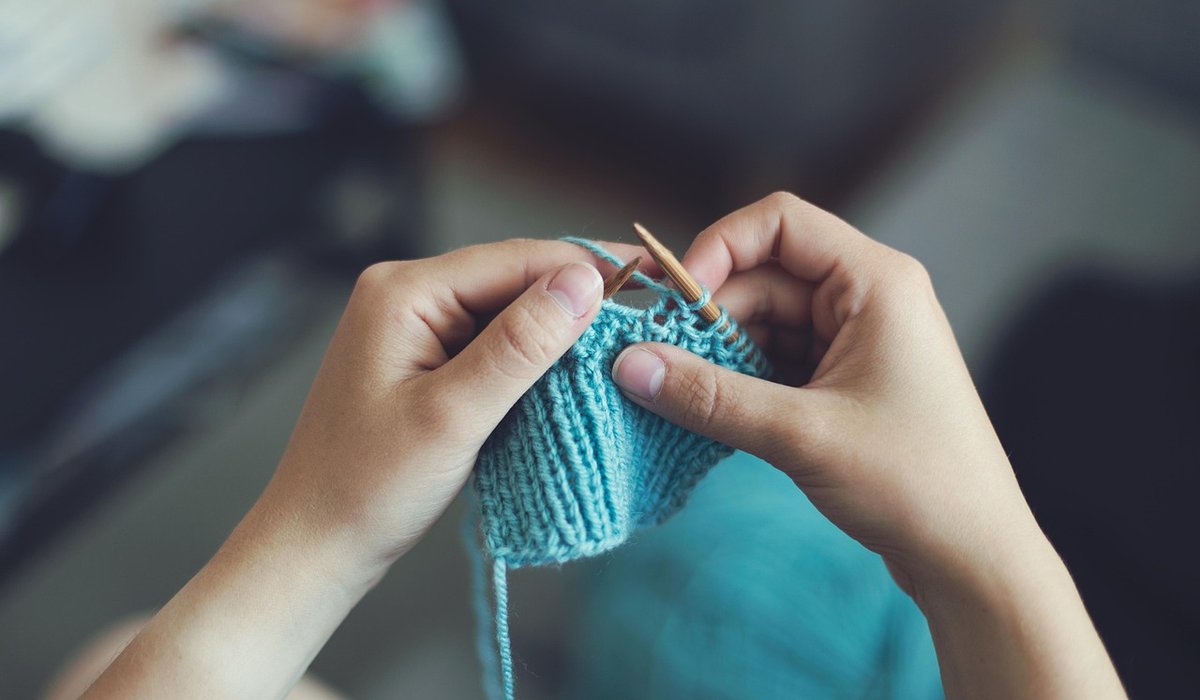
The single best piece of advice for a new knitter or crocheter is this: begin with a smooth, light-coloured yarn in a medium weight. There is nothing boring about it — it is simply the yarn that lets you learn.
Light colours matter enormously. Cream, oatmeal, pale grey, soft duck-egg blue and gentle pastels all let you see the individual stitches, the twist of the yarn and exactly where your needle or hook should go. Black, navy and dark chocolate may be your favourite colours, but they hide every mistake and force you to work by feel alone.
Smoothness matters just as much. A plied yarn with a firm, tight twist glides over your needles and shows stitch definition beautifully. Save these for later, once your stitches are tidy:
- Fluffy textures — mohair, eyelash, chenille and bouclé hide your stitches completely.
- Single-ply yarns — they split easily and can be frustrating to work.
- Novelty yarns — ribbons, tapes and anything glittery are for confident hands.
- Very slippery fibres — pure silk and rayon slide off the needles before you have finished a row.
Wool, or a wool-rich blend, is forgiving in a way that synthetics are not. It has a slight grip, so your stitches stay where you put them, and it is springy enough to smooth out small unevenness when you block the finished piece.
Understanding Yarn Weight: Why Worsted Is the Sweet Spot
Very fine yarns such as lace or 4-ply mean small needles, slow progress and a great deal of patience. Very chunky yarns look quick and easy but can be splitty, hard on the hands and awkward to tension evenly. Neither is ideal for a first project.
Worsted weight sits right in the middle, and it is the weight most beginners should reach for. In UK shops you will often find it labelled as aran, or as a heavy double knitting — the wording varies between brands, so check the recommended needle size on the ball band rather than trusting the name.
A worsted weight yarn typically asks for 4mm to 5mm needles or a hook in a similar size. That is comfortable to hold, large enough to see clearly, and the fabric grows fast enough to keep you motivated. A simple scarf or a set of practice squares will not take months. If you are working from a pattern, always match the yarn weight it calls for, then work a tension square before you begin.
Fibre Choices: What to Look For and What to Avoid
Once you have settled on a smooth worsted weight, the fibre content is the next decision.
- Pure wool — springy, warm and wonderfully forgiving, and it blocks beautifully. Ordinary non-superwash wool will felt if you machine wash it, which makes it perfect for mittens and slippers but a risk for anything else.
- Superwash wool — treated so it can go in the machine. Ideal for baby items, gifts and anything you want to be low-maintenance.
- Acrylic — inexpensive, colourful and machine washable, though it can squeak on the needles and split more readily. An acrylic and wool blend is a perfectly good budget option.
- Cotton — lovely for dishcloths and summer tops, but it has almost no stretch, so it will not hide uneven tension. Leave it until your stitches are consistent.
Read the Ball Band Before You Buy
The ball band is the most useful label in the shop, and beginners often skim past it. Look for the fibre content, the length in metres, the recommended needle or hook size, the tension guide, the washing instructions and the dye lot number.
Two practical points are worth remembering. First, buy all the yarn you need for a project in one go, and check that every ball carries the same dye lot — colours can vary subtly between batches, even in something as simple as cream. Second, compare length rather than weight. Fifty grams of cotton holds far fewer metres than fifty grammes of wool, so a bargain ball may not go nearly as far as you think. Tuck one ball band into your project bag and keep it until the piece is finished and washed.
Building a Small, Sensible Beginner Stash
There is no need to fill a cupboard before you have finished your first scarf. Two or three balls of smooth worsted-weight wool in a light neutral will carry you through a scarf, a hat or a good stretch of practice squares. Buy one extra ball beyond what the pattern suggests, so a mistake or a longer-than-expected border does not leave you short.
If your yarn arrives in a twisted hank rather than a ball, wind it into a cake or a loose ball first and work from the outside — never straight from the skein, or you will spend your evening untangling. Choose a yarn whose recommended needle or hook size matches the tools you already own, and keep your first few projects simple, smooth and light. Your hands will learn quickly, and before long that dark, fluffy, glamorous yarn will be well within reach.

4 Comments